

Few moments test both teams and their managers like a reorganization.
Reorganizations are rarely smooth. They often come with little warning, redrawing reporting lines overnight and disrupting familiar routines. Teams suddenly question their place and priorities, while managers are expected to provide reassurance even as they face uncertainty themselves.
As a change agent, I’ve observed many managers during these times. What strikes me most is not only the stress on employees, but the weight carried by managers themselves.
They’re expected to hold their teams together while privately wrestling with their own uncertainty:
- “What does this mean for my role?”
- “How can I support my team when I don’t have the answers myself?”
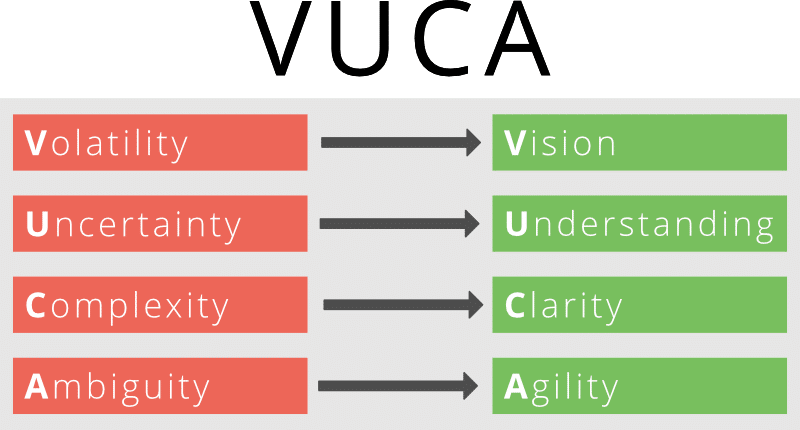
This is where VUCA comes into play — in two different forms.
The First VUCA: The Storm Around Us
- Volatility — things change fast. Sudden shifts in structure or strategy unsettle teams. Work done yesterday may no longer matter, leading to frustration.
- Uncertainty — unclear roles and responsibilities create anxiety and hesitation; decisions stall while people wait for clarity.
- Complexity — competing priorities and tangled dependencies leave the team overwhelmed, unfocused, and at risk of fatigue.
- Ambiguity — no clear definition of success creates confusion; different people interpret goals differently, sparking friction.
This is the VUCA that managers and teams feel pressing down on them. It creates doubt, fatigue, and a sense of instability.
The Second VUCA: The Manager’s Response
But there’s another VUCA — one that leaders can choose to embody to guide their teams.
- Vision – In Volatility, lean on Vision
When everything changes quickly, remind your team of the purpose that hasn’t changed. Instead of trying to predict every change, create a strong north star (purpose, desired outcomes, values).
Anchoring them in a clear mission provides stability.
Example: “Our mission to ensure client trust remains the same. Even with new structures, that’s where we focus.” - Understanding – In Uncertainty, cultivate Understanding
When answers are scarce, don’t pretend to know it all. Instead, listen deeply, gather perspectives, acknowledge what’s known and what isn’t, sense-make together. Share information openly, to the extent you’re able.
Example: “Here’s what we know, here’s what we’re waiting to learn — and your insights are key as we adapt.” - Clarity – In Complexity, bring Clarity
When priorities compete, simplify and focus. Set clear priorities. Cut through the noise and give the team a sense of what matters most right now. Be the guiding compass when times are foggy.
Example: “This month, we’ll focus on two deliverables. Other items will wait until next sprint.” - Agility – In Ambiguity, foster Agility
When there’s no precedent, create space for experiments. Encourage small, safe-to-fail tests that generate learning. Review progress frequently and adjust course.
Example: “Let’s try this approach with one client segment, then adjust quickly based on what we learn.”
Why This Matters
Because it’s not easy for managers. They’re not standing safely on the shore — they’re in the storm too. They face shifting expectations, unclear directives from above, and their own uncertainty about the future. It takes courage to steady others when you yourself feel unsteady.
Managers who shift from one VUCA to the other provide exactly what their teams need: anchors, focus, and permission to adapt.
They don’t eliminate the turbulence — they help their people navigate it.
And in doing so, they build not just resilience, but trust.
Are you leading through reorganization? How are you helping your team navigate the storm?
~By Rima Mokdad
Organizational Coach